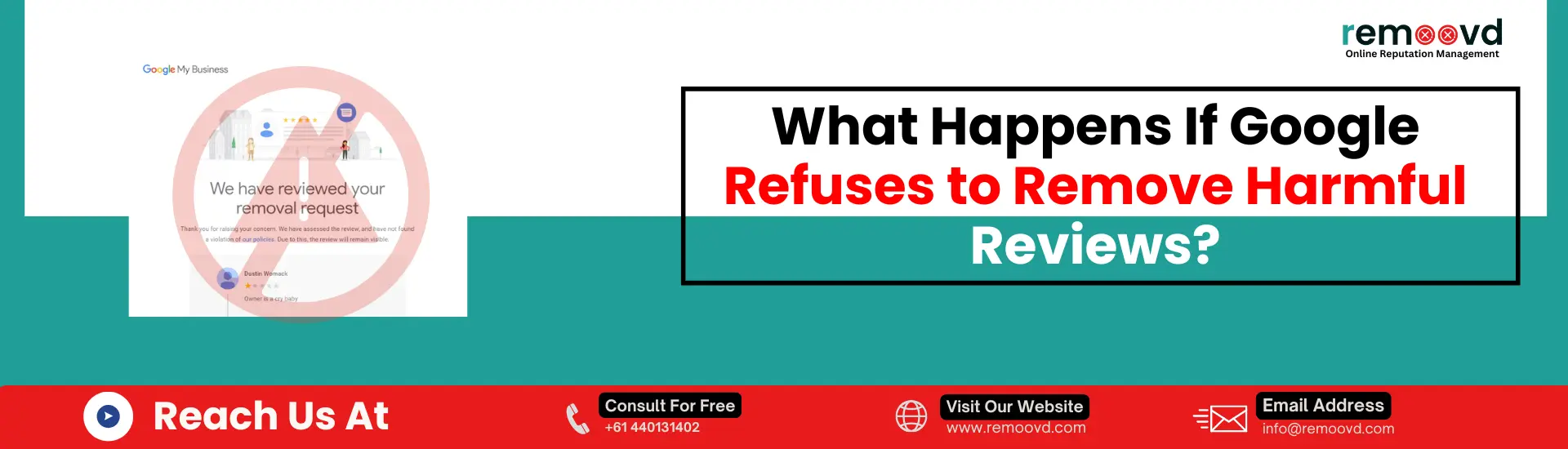
What Happens If Google Refuses to Remove Harmful Reviews?
In today’s digital age, online reviews play a pivotal role in shaping the reputation of businesses. Google, as one of the leading platforms for review aggregation, holds significant power over how businesses are perceived by potential customers. However, there are instances when harmful reviews appear on a business’s Google listing, and when a request is made to Google for removal, they might refuse. This can leave businesses wondering: What happens when Google refuses to remove harmful reviews?
In this article, we will explore the consequences of Google’s refusal to remove harmful reviews and offer insight into how businesses can address such situations.
1. The Impact of Harmful Reviews
Harmful reviews can be devastating for businesses, especially when they are misleading, defamatory, or outright false. These types of reviews can:
- Damage a business’s reputation: Negative reviews, particularly those with false claims, can tarnish a brand’s image. They often create a ripple effect that discourages potential customers from engaging with the business.
- Affect SEO and online visibility: Google’s search algorithms take reviews into account when ranking businesses. A stream of harmful or negative reviews can hinder a business’s local SEO performance, pushing them down in search results and making it harder for new customers to discover them.
- Diminish customer trust: Online reviews are a key factor in purchasing decisions. If potential customers encounter negative feedback, especially when it is exaggerated or unjust, they may choose competitors instead.
2. Why Google Might Refuse to Remove a Review
While many businesses request the removal of harmful reviews, Google generally has strict guidelines about when content can be removed. Google’s review removal policy stipulates that a review will only be deleted if it violates their policies, which typically include:
- Offensive or inappropriate content: This includes profanity, hate speech, or anything that violates Google’s content guidelines.
- Spam or fake reviews: Reviews that appear to be incentivized or written by someone with no actual experience with the business.
- Conflict of interest: Reviews written by competitors or business owners themselves.
If a review does not fall into these categories, Google will likely refuse the removal request, leaving businesses with limited recourse.
3. What Can Businesses Do if Google Refuses Review Removal?
Even though Google may not always comply with a request to remove harmful reviews, businesses still have several avenues for addressing the situation. Here are some of the most effective strategies:
Responding to Negative Reviews
One of the most important actions a business can take is to respond professionally to negative reviews. Whether the review is fair or not, a well-crafted, empathetic response shows potential customers that the business cares about feedback and strives to resolve issues. A thoughtful reply can:
- Mitigate the damage: By responding publicly, you demonstrate to customers that you’re proactive and solution-oriented.
- Turn the situation around: If the issue can be resolved, it may lead to the reviewer amending or deleting their review.
When responding to harmful reviews, always maintain a calm, professional tone. Acknowledge the customer’s concerns and offer solutions if appropriate.
Encouraging Positive Reviews
Another effective tactic is to build a strong base of positive reviews. While it might not immediately undo the damage of harmful reviews, a collection of positive reviews can:
- Boost the business’s overall rating: A higher overall rating can outweigh a few negative reviews and improve public perception.
- Showcase customer satisfaction: More positive feedback helps create a trustworthy reputation and shows that the business consistently meets or exceeds customer expectations.
Encourage satisfied customers to leave reviews by politely requesting feedback after providing exceptional service. However, remember that soliciting fake reviews violates Google’s policies and can backfire.
Flagging and Reporting Violation
If you believe the harmful review violates Google’s review policies, you can flag it for Google’s moderation team to review. To do this:
- Go to the review and click on the flag icon next to it.
- Select the reason for flagging the review (e.g., it violates Google’s policies on harassment or spam).
Even if Google refuses to remove a review initially, this process can help Google’s algorithms catch reviews that repeatedly violate its policies. The more reports there are on a review, the more likely it is to be scrutinized.
Legal Recourse
In extreme cases, when a review contains defamation or false information, businesses may explore legal action. If the review is proven to be damaging to the business’s reputation and is based on false facts, a defamation lawsuit could be a possibility. However, this route can be costly and time-consuming, so it should be considered a last resort.
Before taking legal steps, it’s often best to seek legal advice to assess whether the review truly qualifies as defamation under local laws.
Conclusion
When Google refuses to remove harmful reviews, businesses may feel helpless, but there are many ways to mitigate the impact. By responding to negative reviews with professionalism, fostering positive feedback, flagging violations, and exploring legal options, businesses can manage and even overcome the damage caused by harmful reviews.
The key to success in dealing with negative online feedback is a combination of quick action, consistent reputation management, and a commitment to providing excellent customer experiences. By staying proactive, businesses can protect their reputation and continue to thrive, regardless of the occasional negative review. If the situation becomes too complex, partnering with experts like Remoovd for Google Review Removal Services can provide the necessary support and peace of mind.


