How to Remove Fake Google Reviews in the United States
Fake Google reviews are a growing threat to American businesses. Whether you’re a small dental practice in California, a law firm in New York, or a restaurant in Texas, malicious fake reviews can tank your online reputation and directly impact your bottom line.
In fact, studies show that 90% of consumers trust online reviews as much as personal recommendations. A single fake 1-star review can deter potential customers and damage years of hard work.
The good news? You don’t have to accept fake reviews lying down. In this guide, we’ll walk you through proven methods to remove fake Google reviews in the United States, legal considerations specific to U.S. regulations, and steps you can take right now to protect your business.
Why Fake Reviews Are a Problem for U.S. Businesses
Before diving into removal strategies, it’s important to understand why fake reviews matter:
The Impact on Your Business
- Local SEO Rankings: Google’s algorithm considers review quality and quantity when ranking local businesses
- Customer Conversion: Negative reviews significantly reduce click-through rates from search results
- Brand Damage: Fake reviews spread quickly on social media and can generate negative press
- Legal Liability: Some fake reviews contain defamatory statements that cross legal boundaries
Common Sources of Fake Reviews in the U.S.
- Disgruntled former employees
- Competitors targeting your business
- Automated review generation services (illegal)
- Fake review farms
- Personal vendettas
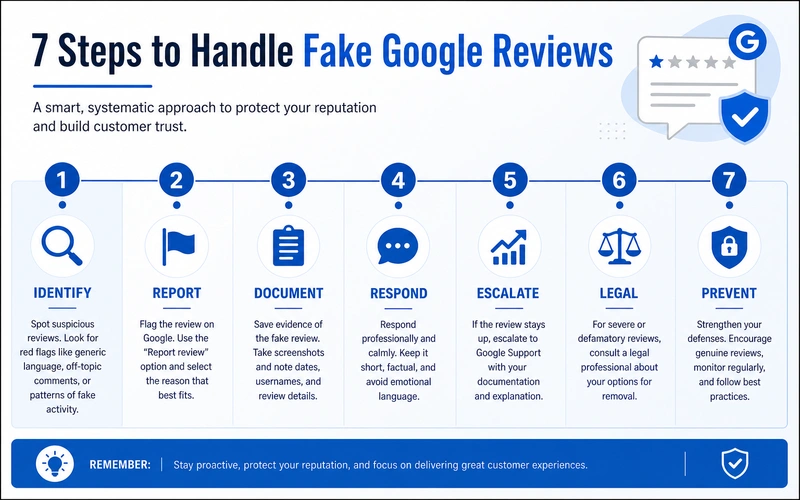
Step 1: Identify Fake Reviews
Not all negative reviews are fake, but certain red flags can help you spot them:
Signs of a Fake Review
Generic language: “Worst place ever” or “Don’t waste your time” without specific details
No account history: The reviewer has only posted 1-2 reviews ever
Suspicious patterns: Multiple 1-star reviews posted on the same day
Factually incorrect: Claims about your business that are demonstrably false
Anonymous accounts: No profile picture, name doesn’t match local area
Copy-paste quality: Identical reviews across multiple businesses
Tip: Use Google Review Management Tools to monitor all reviews systematically and identify patterns.
Step 2: Report the Review to Google (The Official Method)
The first and most important step is reporting directly to Google. Here’s how:
How to Report a Fake Review to Google
- Go to your Google Business Profile
- Visit Google Business Profile
- Sign in with your business account
- Navigate to Reviews
- Click “Reviews” in the left menu
- Find the fake or inappropriate review
- Click the Three-Dot Menu
- Select “Flag as inappropriate” or “Report”
- Choose Your Reason
- Select from options like:
- “Doesn’t follow Google’s review policies”
- “Commercial complaint or review solicitation”
- “Defamatory or hateful content”
- “Contains offensive language”
- Select from options like:
- Submit Your Report
- Provide a brief explanation
- Click “Submit”
What Google Looks For
Google has specific policies about which reviews violate their guidelines:
- Fake reviews or reviews from competitors
- Defamatory content or false statements
- Reviews containing off-topic content
- Spam or solicitations
- Reviews that disclose personal information
Note: Google typically reviews reports within 24-48 hours. Legitimate policy violations are usually removed within this timeframe.
Step 3: Document Evidence and Build Your Case
If Google initially denies your request, having documentation strengthens your appeal.
What Evidence to Gather
- Screenshots of the review and reviewer’s profile
- Your customer records showing no transaction with that account
- Communication records if the reviewer contacted you offline
- Date patterns showing suspicious timing
- Similar reviews on competitor pages
Create a Written Record
Document:
- When you discovered the review
- Why you believe it’s fake
- Any correlating events (recent dispute, staff departure, etc.)
- Previous attempts to contact the reviewer
Step 4: Respond Publicly to Fake Reviews
While waiting for Google’s decision, respond professionally to the review on your Google Business Profile.
How to Respond
- Click the review
- Select “Respond”
- Write a professional, factual response that:
- Thanks them for feedback (if appropriate)
- Politely disputes false claims with facts
- Offers to resolve the issue if they contact you directly
- Showcases your customer service to other readers
Example Response
“Thank you for taking the time to review us. We’re concerned about the accuracy of your feedback, as we have no record of your visit on the date mentioned. Our customer records show no transaction under this name. We’d like the opportunity to understand your experience. Please contact us directly at [phone] or [email] so we can resolve this matter promptly.”
Why This Works: Potential customers reading your response see:
- You’re responsive and professional
- You stand by the quality of your service
- You welcome dialogue and resolution
- You have systems to track customer interactions
Step 5: Contact Google Support for Persistent Issues
If the review isn’t removed after your first report, escalate your case.
When to Contact Google Support
- Review was denied despite policy violation
- Multiple policy-violating reviews from same account
- Coordinated attack from competitors
- Defamatory content that could affect your business legally
How to Contact Google
Via Google Business Profile Support:
- Go to your Google Business Profile
- Click “Help” (bottom left)
- Select “Get support”
- Describe your issue
- Attach documentation and screenshots
Important: In your second report, reference your previous submission and provide additional evidence. This shows persistence and strengthens your case.
Step 6: Legal Options for Defamatory Reviews
If a review contains false statements that damage your business, you may have legal recourse under U.S. defamation law.
Understanding Defamation in the U.S.
To pursue legal action, you typically must prove:
- A false statement of fact (not opinion)
- Published (visible to the public)
- About your business (identifying)
- Causing damages (measurable harm)
- Made with negligence or malice (depending on whether you’re a public figure)
When to Consult a Lawyer
Contact an attorney if:
- The review contains false factual claims (not just negative opinions)
- You can demonstrate measurable business harm
- You’ve exhausted other removal options
- Multiple defamatory reviews from the same person
Tip: Many U.S. states have specific “review removal” or defamation laws favoring businesses. A local attorney can help you navigate these.
Step 7: Prevent Future Fake Reviews
The best defense is prevention. Here are U.S.-specific strategies:
Build a Review Culture
- Ask satisfied customers for reviews through email or in-person
- Make it easy: Provide direct links to your Google Business Profile
- Timing matters: Request reviews within 24-48 hours of service
- Train staff to encourage real customer reviews
Monitor Continuously
- Set Google Alerts for your business name
- Use review monitoring tools to catch fake reviews early
- Schedule weekly reviews of your Google Business Profile
- Train a team member to oversee reputation management
Don’t Play Dirty
Avoid these practices—they violate Google’s policies and can get your business suspended**:
- Paying for fake positive reviews
- Asking customers to remove negative reviews
- Leaving fake reviews on competitor sites
- Using review generation bots
- Offering incentives specifically for reviews
Industry-Specific Guidance for U.S. Businesses
Fake reviews vary by industry. Here’s what to watch for:
Dental Practices
Fake reviews often attack treatment quality or pricing. See our guide on handling negative Google reviews for dental practices for specific strategies.
Real Estate Agents & Brokers
Competitors frequently target real estate businesses. Learn more about removing negative Google reviews for real estate.
Restaurants & Hospitality
Food safety claims are common targets. Check our restaurant-specific review removal strategies.
Law Firms
Client confidentiality makes legal reviews sensitive. Review specialized guidance for law firms.
Healthcare Providers
HIPAA compliance adds complexity. See our healthcare provider review management guide.
What if Google Won’t Remove the Review?
If Google denies your removal request, you have additional options:
Appeal Google’s Decision
- Gather stronger evidence of policy violation
- Submit a second report with additional documentation
- Clearly reference why the review violates Google’s specific policies
- Include screenshots showing policy language and how the review violates it
Learn more about what to do when Google denies fake review removal.
Alternative Actions
- File a complaint with the Better Business Bureau (BBB)
- Report to the FTC if reviews are part of competitor deception
- Pursue legal action for defamatory content
- Contact review platforms if fake reviews appear elsewhere
The Role of Professional Review Management Services
If you’re overwhelmed by fake reviews or lack the time to manage this yourself, professional help is available.
What Reputation Management Experts Do
- Monitor all reviews 24/7
- Identify fake reviews using advanced analytics
- Handle Google reports and escalations
- Respond professionally to reviews
- Track removal requests and appeals
- Document evidence for legal cases
- Implement long-term reputation strategies
Learn more about hiring a reputation management expert to protect your business.
Key Takeaways: Your Action Plan
- Identify reviews showing clear signs of being fake
- Report immediately to Google with specific policy violations
- Respond professionally to demonstrate your customer service
- Document everything for future appeals
- Escalate if needed through Google support or legal channels
- Prevent future issues by building genuine customer reviews
- Monitor continuously to catch problems early
- Get professional help if fake reviews become overwhelming
Next Steps
Ready to take action against fake reviews? Here are your options:
Option 1: DIY Approach
Follow the steps in this guide to report and appeal fake reviews yourself. Access our full review removal process guide.
Option 2: Professional Support
If you need expert guidance, explore our review removal services tailored for U.S. businesses.
Option 3: Get a Free Consultation
Contact our team for a free reputation assessment and personalized removal strategy.
FAQ: Common Questions About Fake Review Removal in the U.S.
Q: How long does it take Google to remove a fake review?
A: Typically 24-48 hours if it clearly violates policies. Borderline cases may take longer.
Q: Can I find out who left a fake review?
A: Not directly. Google doesn’t reveal reviewer identities. You may need legal discovery for defamation cases.
Q: Is it legal for me to respond to a fake review?
A: Yes, professional, factual responses are encouraged by Google and help other customers assess the review’s credibility.
Q: What if the same person keeps leaving fake reviews?
A: Report each one separately. Google may identify patterns and take action against the account.
Q: Can I be sued for defamation if I falsely accuse someone of leaving a fake review?
A: Potentially, which is why you should focus on policy violations rather than accusations when reporting.
Q: Does leaving fake reviews happen to all U.S. businesses?
A: Most businesses face at least one suspicious review. Industries like restaurants, medical offices, and real estate see higher volumes.
Related Resources
- How to Handle Negative Google Reviews
- Why Google Reviews Matter for Local SEO
- Handle Fake Google Reviews from Competitors
- Online Reputation Management Services
- Review Management Solutions
About This Guide
This guide reflects current Google policies and U.S. business practices as of 2025. Laws and procedures change, so verify current requirements with official Google resources or legal counsel for your specific situation.


